
News
Entrepreneurship Development And Our Educational Curriculum

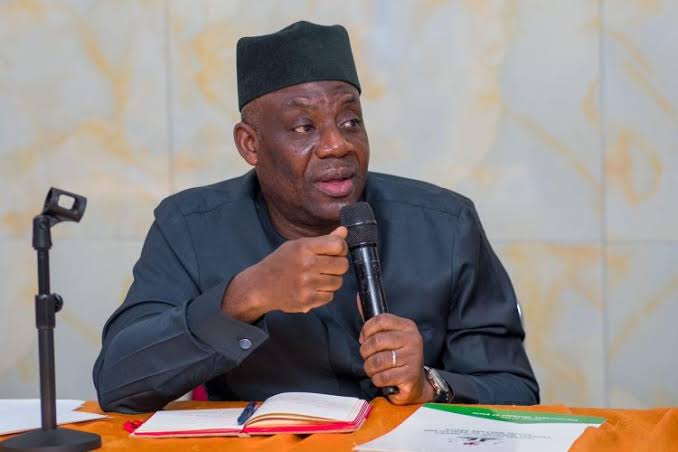
Entrepreneurship Development And Our Educational Curriculum
It is encouraging to note that our education ministry officials are fast moving away from needless and controversial policies to more impactful ones that are geared towards revolutionising our archaic education policies and tertiary Institutions’ curricula
Dr. Tunji Alausa on assumption of office as education minister, quickly announced the reversal of the admission age benchmark for tertiary Institutions in the country from 18 years to 16 years. There were more pressing and important problems or issues to be resolved by the ministry, especially the recently announced release of N50 billion by the federal government to the academic and non-academic staff unions of federal universities for the settlement of earned allowances, as promised by President Bola Ahmed Tinubu, GCFR.
You can fact-check me but I believe that this is the longest time ASUU has spent in school without a strike after the inauguration of a new government. President Bola Ahmed Tinubu, GCFR has been in office for nearly two years and there has been no strike by ASUU since 2023. It means we are gaining some stability in the administration of our educational sector.
“You cannot be building mosques alone, you must build mosque goers too”, according to a Hausa proverb, underpinning the importance of not only building classrooms but improving on the welfare and proficiency of the classroom teachers.
The recent furore over a young lady’s viral video about the conditions of service of the NYSC, against the backdrop of hard economic policy reforms, brought to the fore, the debate about the viability, and usefulness of the NYSC. It brought back questions about the aims of establishing the corps in the first place. It also brought to the front burner, the damage done by scrapping history from our education curricula, and the subtle backdoor efforts of smuggling in and embedding alien education materials, aimed at disorienting our children and our youths.
It is encouraging to note that our education ministry officials are fast moving away from needless and controversial policies to more impactful ones that are geared towards revolutionising our archaic education policies and tertiary Institutions’ curricula.
Dr. Tunji Alausa on assumption of office as education minister, quickly announced the reversal of the admission age benchmark for tertiary Institutions in the country from 18 years to 16 years. There were more pressing and important problems or issues to be resolved by the ministry, especially the recently announced release of N50 billion by the federal government to the academic and non-academic staff unions of federal universities for the settlement of earned allowances, as promised by President Bola Ahmed Tinubu, GCFR.
You can fact-check me but I believe that this is the longest time ASUU has spent in school without a strike after the inauguration of a new government. President Bola Ahmed Tinubu, GCFR has been in office for nearly two years and there has been no strike by ASUU since 2023. It means we are gaining some stability in the administration of our educational sector.
“You cannot be building mosques alone, you must build mosque goers too”, according to a Hausa proverb, underpinning the importance of not only building classrooms but improving on the welfare and proficiency of the classroom teachers.
The recent furore over a young lady’s viral video about the conditions of service of the NYSC, against the backdrop of hard economic policy reforms, brought to the fore, the debate about the viability, and usefulness of the NYSC. It brought back questions about the aims of establishing the corps in the first place. It also brought to the front burner, the damage done by scrapping history from our education curricula, and the subtle backdoor efforts of smuggling in and embedding alien education materials, aimed at disorienting our children and our youths.
Our cultural heritage has been under attack for many decades, and institutions such as the NYSC meant to foster unity, tolerance, and patriotism amongst us, are under severe attack for the wrong reasons. Unity colleges, and all other tertiary institutions across the country were built to foster unity and tolerance amongst us considering our ethnic diversity. This is in the same vein with the NYSC programme.
Back in the days when I was just graduating from the university, our elders used to lament about the quality of graduates produced from Nigerian higher institutions. They labelled us half-baked. Today, the products are hardly baked at all and are just a pudding of misadventure, hauled up as one piece, meant to be a product of rigorous academic and moral learning.
The industrial training programmes in our tertiary institutions coupled with the NYSC programme, are the hands-on, skill-infused learning segments that translate academic learning to practical workplace schedules. The NYSC and similar institutions must be utilised in driving the skill and entrepreneurial development disposition of the education ministry if it is to succeed in promoting skills acquisition and entrepreneurship.
The almajiri system just like the NYSC, is to be positioned as a skill and entrepreneurship hub. Dr. Tunji Alausa, the education minister, is redefining the ministry’s approach to almajiri education, aiming to integrate it with the formal education system and equipping almajiris with skills for self-sufficiency.
This entails not only bridging the gap between traditional religious learning and western education, which would provide access to basic literacy but also developing the vocational skills of the almajiris at the same time. This new approach seeks the collaboration of religious leaders to ensure the long-term success of the reform. The approach envisions a seamless transition of the almajiri from the almajiri system to the nation’s higher education system. For example, in addition to Islamic studies, students would be taught tailoring, carpentry, plumbing, farming, and IT literacy to mention a few. The new approach by the minister will at the end of the day eliminate the students of the almajiri system from the out-of-school children populace, as the almajiri system would have in place a very robust system of learning and skills acquisition.
Systemic deep reforms are being carried out in the education sector. No wonder ASUU is not “vexing” again. NELFUND is taking care of Nigerian students, both in tuition and stipends/ welfare coverage that makes learning possible and more conducive. Those coveted results are now attainable as students and parents are allowed the necessary breathing space over educational sponsorship.
TETFUND is being repositioned to address the tailored needs of institutions aside from the blanket approach for all institutions with varying needs and demands. Both the public and private sector stakeholders are keying into the systemwide reforms and once these are sustained and pursued vigorously, we will have a better educational eco-system that produces real-time solutions to our unique societal needs, as opposed to churning out more problems onto the myriads of existing ones.

Fidelity Bank Improves Access to Quality Education in Anambra
Leading financial institution, Fidelity Bank Plc has reaffirmed its commitment to advancing quality education and youth empowerment with the renovation of an administrative building to Community Secondary School, Enugwuabo Ufuma, in Orumba North Local Government Area of Anambra State.
The one-storey administrative block was comprehensively renovated as part of Fidelity Bank’s interventions to address infrastructural challenges faced by the school. The renovated facility was then formally handed over to the school community at a ceremony attended by government officials, community leaders, and other stakeholders.
Speaking at the official handover ceremony, the Regional Bank Head, Fidelity Bank Plc Awka, Dr. Nosa Orumwense, said the project underscores the bank’s long-standing commitment to investing in education as a catalyst for sustainable development.
“For us at Fidelity Bank, this project represents more than a building. It represents opportunity, progress, and a shared commitment to building a better future for our youths here in Enugwuabo Ufuma and beyond.
By improving the educational infrastructure of this community, we are providing students and teachers with an environment that promotes learning, discipline, and pride”, Orumwense added.
Also speaking at the event, the Commissioner for Education, Professor Ngozi Chuma-Udeh, who represented the Governor of Anambra State, Professor Chukwuma Soludo, described the project as a true demonstration of corporate social responsibility.
“Corporate social responsibility is what gives an organisation its human nature. What Fidelity Bank has done reflects compassion and a genuine commitment to touching lives”, Prof. Chuma-Udeh said.
This school was earlier placed on an emergency list due to the deplorable condition of its buildings. During my last visit, I was genuinely concerned about the safety of both students and teachers. Today, the school wears a new look, thanks to Fidelity Bank’s support”.
The Commissioner also expressed the state government’s appreciation to Fidelity Bank, saying, “We thank Fidelity Bank for this intervention, which clearly demonstrates the true meaning of corporate social responsibility – making tangible impacts that improve lives and strengthen communities”.
The project forms part of Fidelity Bank’s broader CSR strategy focused on empowering communities, strengthening educational institutions, and creating long-term socio-economic value across Nigeria.
Ranked among the best banks in Nigeria, Fidelity Bank Plc is a full-fledged Commercial Deposit Money Bank serving over 9.1 million customers through digital banking channels, its 255 business offices in Nigeria and United Kingdom subsidiary, FidBank UK Limited.
The Bank is a recipient of multiple local and international Awards, including the 2024 Excellence in Digital Transformation & MSME Banking Award by BusinessDay Banks and Financial Institutions (BAFI) Awards; the 2024 Most Innovative Mobile Banking Application award for its Fidelity Mobile App by Global Business Outlook, and the 2024 Most Innovative Investment Banking Service Provider award by Global Brands Magazine. Additionally, the Bank was recognized as the Best Bank for SMEs in Nigeria by the Euromoney Awards for Excellence and as the Export Financing Bank of the Year by the BusinessDay Banks and Financial Institutions (BAFI) Awards.
News
Nafisa, World’s Best in English, Launches Campaign to Stop Vernacular Speaking and Promote English in Northern Schools

Nafisa, World’s Best in English, Launches Campaign to Stop Vernacular Speaking and Promote English in Northern Schools
Nafisa Abdullahi Aminu, celebrated winner of the prestigious TeenEagle3 English Language Global Finals, has unveiled a bold new campaign to promote the exclusive use of English in Northern Nigerian schools, advocating for the gradual phasing out of vernacular in classrooms.
Speaking on behalf of her peers at Nigerian Tulip International College (NTIC) during a recognition visit by the Arewa Consultative Forum (ACF) and Zenith Bank, Nafisa expressed deep appreciation for the honour accorded to the students.
According to Nafisa, “English Language is more than just a subject; it is a gateway. For students, fluency in English opens doors to higher education, global resources, and academic breakthroughs. On the other hand, a weak command of English can become a barrier, closing opportunities and limiting the ability to compete on equal ground in examinations, research, and international engagements.”
She unveiled her campaign, tagged “Always Speak English: No More Vernacular in Schools,” under her new initiative, English Language for Peace and Development. The project aims to strengthen literacy, improve educational outcomes, foster peacebuilding, and expand economic opportunities for Northern students through mastery of English.
The Global Champion described the ACF’s engagement as a strong demonstration of its commitment to youth development, educational advancement, and the future of Northern Nigeria.
Nafisa further called on Northern leaders to build stronger partnerships with institutions like Nigerian Tulip International College, which, she noted, combines academic excellence with character development.
The Arewa Consultative Forum expressed readiness to support Nafisa’s campaign, recognising its alignment with the Forum’s broader vision of advancing education and promoting peace across the region.
Nafisa concluded with a prayer for the leaders, reaffirming her generation’s commitment to using education as a tool to reshape the region’s future.
Signed
Hassan Salihu
Media Advisor to
Nafisa Abdullahi Aminu
27th September, 2025
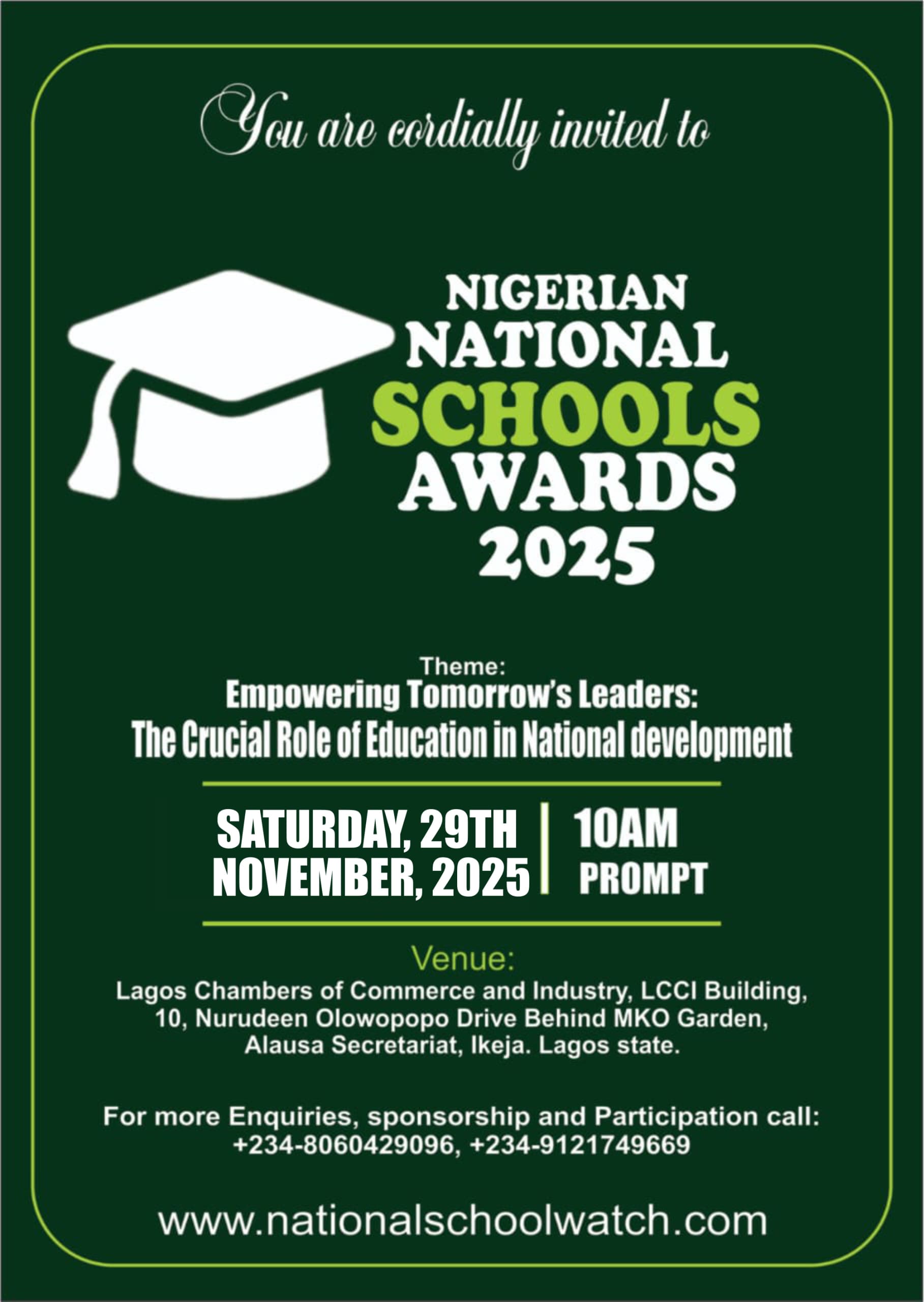
Nigerian National School Awards 2025 (NNSA) Now Holds On Saturday November 29th 2025
All is set for the Nigerian National School Awards 2025 (NNSA)
The highly anticipated event initially slated for the 22nd of October 2025 would now hold on the 29th of November 2025 at the same venue, the Lagos Chambers of Commerce and Industry (LCCI), Conference and Exhibition Centre, 10 Nurudeen Olowopopo Street, Behind Maruwa Garden, Alausa, Ikeja, Lagos. Time : 10am.
According to the convener of the Nigerian National School Awards 2025, Mr. Okpe Anthony Okpe, CEO of Tony Okpe Communications apologize for any inconveniences this change of date must have caused and assured all recipients and anticipated sponsors that the event would now take place on the 29th of November 2025 as announced
Mr. Okpe Anthony Okpe who further said we are celebrating and honoring and presenting over 50 awards making it the largest gathering of schools, students, teachers, parents, service providers, individuals and corporate organisation in Nigeria
Meet 100+ exhibitors showcasing the latest in educational materials and technology
Connect with top schools and service providers in one roof
Schools/ Service Providers: – Providing Elementary and Secondary Education, Alternative/Special Education Services, Education Management Organizations, Charter Schools, Virtual Schools, and Proprietary Schools.
Supplemental Education Service Providers: Providing Higher Education, Vocational Education, Learning Centers, Tutoring Services and Assessment Services.
Educational Products & Services Sector: Production and supply of educational material and products including Educational Products, Publishing, and Supplemental Products.
Education Support Services Sector: – Providing support and ancillary services to the education industry including Education Consultants, Education Information and Research, Education Investment Services, Education Policy Specialists, and Technology Services.
Education is often identified as the cornerstone of a society’s progress and the key to nurturing the leaders of tomorrow. The education sector indeed plays a vital role in shaping individuals into well-rounded, knowledgeable and skilled individuals who can contribute meaningfully to their communities and nation. From instilling essential academic knowledge to fostering critical thinking, leadership skills and emotional intelligence, education serves as a powerful tool in preparing well-rounded personalities for leadership roles and active participation in the development of their country.
Equipping individuals for a complex world
One of the fundamental aspects of the education system is its role in imparting knowledge and skills that are essential for individuals to succeed in an increasingly complex and interconnected world. Through a well-rounded curriculum that includes subjects ranging from mathematics and science to literature and history, students are equipped with the knowledge necessary to understand the world around them and make informed decisions, besides being empathetic and compassionate towards the less fortunate in society.
Beyond facts and figures: cultivating critical thinkers
Moreover, education goes beyond the mere transmission of facts and figures. It also plays a crucial role in developing critical thinking and problem-solving skills among students. By encouraging students to question, analyse and evaluate information, the education provider helps cultivate independent and creative thinkers who are capable of finding innovative solutions to the dynamic challenges facing society.
Furthermore, education plays a pivotal role in nurturing leadership qualities among individuals. By providing opportunities for students to engage in extracurricular activities, such as student government, hobby clubs, sports, and community service, the education sector helps students develop essential leadership skills such as communication, teamwork, decision-making and conflict resolution. These experiences not only prepare students for leadership roles in the future but also instill in them a sense of responsibility, empathy and ethical values.
Emotional intelligence: the mark of a compassionate leader
In addition to academic and leadership skills, education is also instrumental in fostering emotional intelligence and empathy among individuals. Through social-emotional learning programs, students are taught important skills such as self-awareness, self-regulation, empathy and interpersonal skills. These skills are vital for individuals to navigate relationships, work collaboratively with others and become compassionate and ethical leaders.
Education as a tool for social mobility
Moreover, education serves as a powerful tool for promoting social mobility and reducing inequality within society. By providing all individuals, regardless of their background, with access to quality education, the education sector enables individuals to achieve their full potential and pursue opportunities that were previously out of reach. This, in turn, leads to a more diverse and inclusive leadership that better represents the population it serves.
Conclusion
In conclusion, we can say that the education sector plays a multifaceted and crucial role in building the leaders of tomorrow and preparing them to contribute meaningfully to the nation. Through its emphasis on knowledge, critical thinking, leadership skills, emotional intelligence and social mobility, education equips individuals with the tools they need to succeed both academically and personally. By investing in education and ensuring access to quality learning opportunities for all individuals, we can create a future generation of empowered and capable leaders who will be the engines of change in progress, innovation, and positive approaches in society.
The Award presentation ceremony would be broadcast and televised live to the world on all our social media channels
You also have an opportunity to exhibit and showcase your schools, students, quality of teachers and products to the audience on our digital screen at the award presentation ceremony.
This Maiden edition of NNSA 2025 is tailored to honour and celebrate Schools, Students, Teachers and organizations that have exemplified those virtues in the course of the year under review.
In the same vein, the Guest Speaker in set to deliver the keynote speech on the Theme: Empowering Tomorrow’s Leaders: The Crucial Role of Education in National Development
Participants would be required to provide a HD short video, not more than one minute or HD pictures in a flash drive of schools and learning materials, technology and products Et ce tera to be televised to the world and audience on the award presentation day and it is also a gathering to speak with parents.
Don’t miss this profit-making and life-transforming opportunity
Date: Saturday, November, 29th, 2025|10am.
Venue: Lagos Chambers of Commerce and Industry (LCCI)– Alausa. Ikeja.
For Enquiries – Call – 08060429096, 09121749669
email:[email protected]
For more update – Visit →www.nationalschoolwatch.com

-

 News8 months ago
Sterling Bank Names First Beneficiaries of ₦2B ‘Beyond Education’ Fund
-

 News10 months ago
Unity Bank Empowers Young Entrepreneurs With ₦16M Business Grant
-
 News10 months ago
Nigerian National School Awards 2025
-

 News11 months ago
SAFE SCHOOL: NSCDC TAKES PROACTIVE STEPS TOWARDS SECURITY OF SCHOOLS IN FCT, ORGANISES REFRESHER TRAINING FOR PERSONNEL.
-
 News11 months ago
Dangote Donates N15billion To University • Offers Automatic jobs To Best graduating Students
-
 News11 months ago
UNILAG VC Tasks Students On Problem Solving, Inaugurates Resource Hub
-

 News11 months ago
Anambra Government Sanctions School for Allegedly Selling Head Prefect Position
-
 News11 months ago
NUC Grants Full Accreditation to 18 Academic Programmes at Ekiti State University